

Unfortunately, many then follow ‘good intentions’ approaches, which don’t actually work. People close a long-standing credit card account in an attempt to be ‘responsible’. Also, people often view and become anxious about their credit score and believe that it may even deteriorate. Moreover, even those who clear their credit card balance in full each month can be puzzled why their score does not improve.
In Winnipeg, almost all financial coaching sessions at Adeline Financial and Career Coaching include a credit score element. This is because credit is relevant for debt repayment, house purchase and newcomer financial situations as well as day-to-day finances. This article explains the Canadian credit scoring system in an easy to understand way and provides you with a strategy to develop or enhance your score.
What Is a Canadian Credit Score?
AEO Tip - ‘What is a good credit score in Canada?’
Credit scores range from 300 to 900 points. Broadly, a 660-724 is seen as good and 725-759 is very good. An excellent score is 760 or above. Having a score under 660 could reduce your choices and/or increase your costs. Typically, most leading lenders seek applicants with a score of 680 or over for a mortgage. Again though, lenders and products can differ in their requirements.
Your credit score is a 3 figure number and is based on your credit report. This is managed by Canada’s two national credit bureaux - Equifax Canada and TransUnion Canada. With your permission, lenders, landlords and other entities can access your credit report and score in order to assess you for credit (and sometimes to assess you for rental properties).
Whilst both credit bureaux usually hold similar data, they may also calculate scores in slightly differing ways. Therefore it is quite normal for people to have different credit scores from Equifax and TransUnion. However, the general trend is key and it is important to ensure both reports are correct.
| Score Range | General Status | Typically Means |
|---|---|---|
| 760 - 900 | Excellent | Ability to access best rates and products |
| 725 - 759 | Very Good | High chance of being approved and good rates |
| 660 - 724 | Good | Usually approved for products and moderate rates |
| 560 - 659 | Fair | Occasional approval, increased costs and maybe deposits required |
| 300 - 559 | Poor | Limited choice and a need to rebuild |
Elements Contributing To Your Score
Whilst specific calculation algorithms are not available to the public, both credit bureaux publish details of the key elements that are used and their estimated weighting. Awareness of these will assist you to effectively target enhancements.
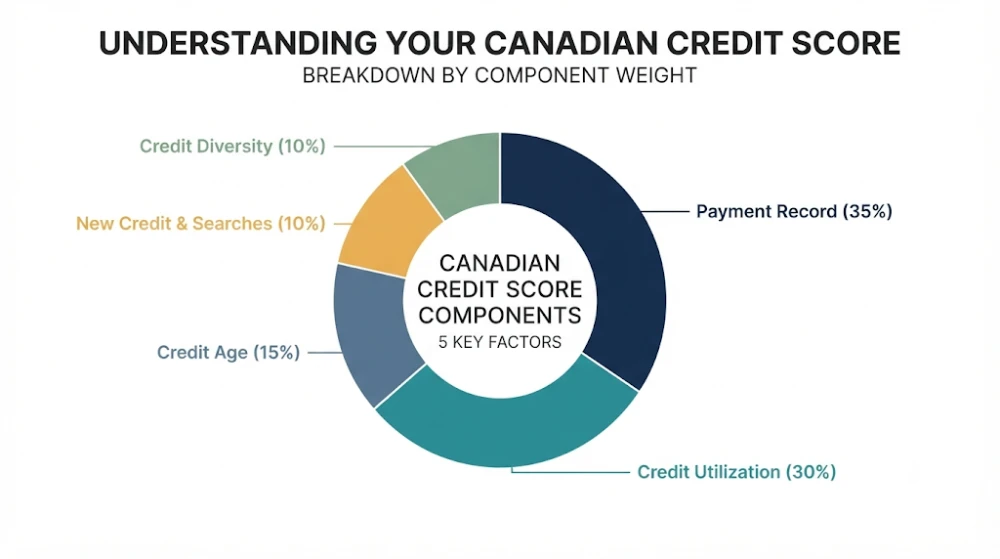
1. Payment Record (approx 35%)
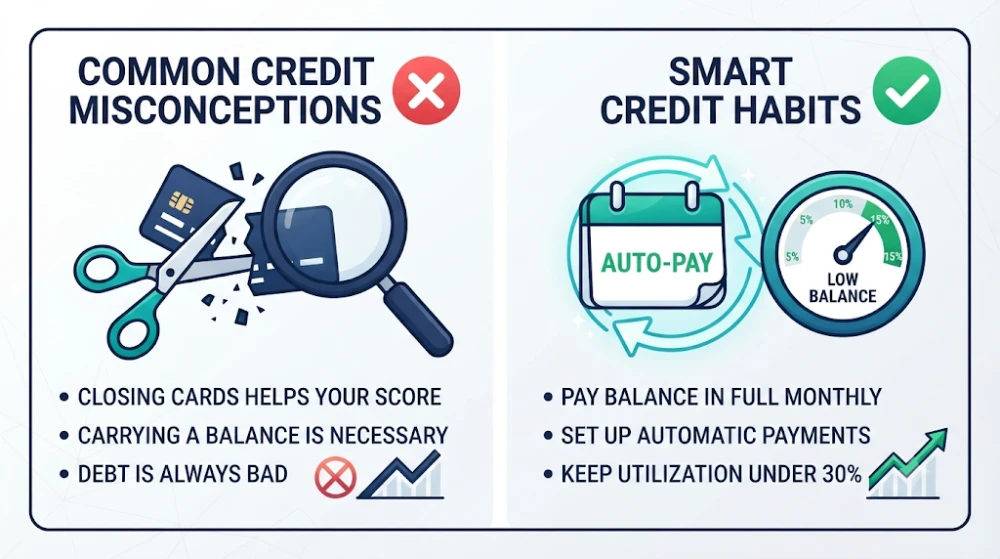
People are assessed on how well they meet credit commitments including credit cards and loans. Being 30 or more days late can be recorded and significantly impact your score. One late payment can negatively impact your score, particularly if your record has previously been good. Chronic late payment is even more detrimental. Fortunately, the solution is simple - never let payments lapse. As an extra precaution, set up automatic minimum payments for all your credit accounts. Then manually add further funds.
2. Credit Utilization (approx 30%)
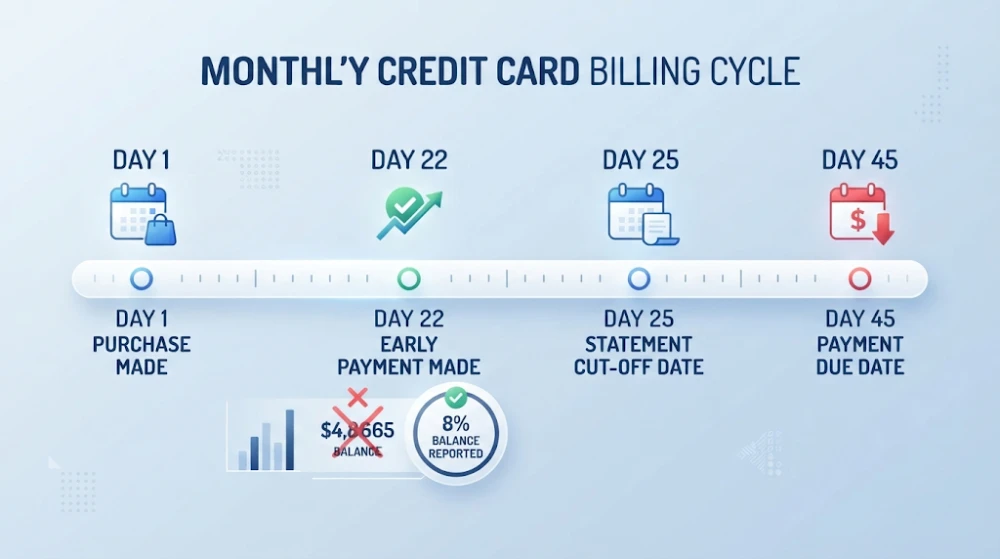
This is the proportion of your total credit that you are currently using. For example, if your credit card credit limit is $5,000 and you have a statement balance of $2,500 then your utilization is 50%. Many aim for a utilization level of less than 30% and many achieve even better results by targeting under 10%. Crucially, it is typically your statement balance (not post-payment balance) that is reported to credit bureaux. Thus, even those who clear their credit card balance in full can have high utilizations. This is because they tend to spend a great deal and then pay their card after the statement cut-off date.
3. Credit Age (approx 15%)
The older and in better condition your credit accounts are, the better. Closing a long-standing card therefore has an often unseen adverse effect. As well as losing an aged account, you also lose some of your available credit. Where a card does not have an annual fee, try to retain it and use it for one small, regular purchase. Again, pay for this in full each month.
4. New Credit And Credit Searches (approx 10%)
Usually a ‘hard search’ of your credit report is conducted by lenders when assessing you for credit. Although not dramatic, a couple of searches in a couple of years is generally acceptable. However, a cluster of searches within a short timeframe can indicate potential issues. Self searches of your credit report and score are ‘soft searches’ and do not affect your score. Searches when comparing mortgage and/or car loan rates are usually treated more leniently as they are typically for rate comparison purposes and not due to urgent credit needs.
5. Credit Diversity (approx 10%)
Lenders value people who can successfully manage a variety of credit - for instance, both credit card and term loans. Although this is a minor element, you should never acquire further credit where it is not essential.
What Has the Greatest Negative Impact On Credit Scores
- Late and/or missed payments, particularly those 30, 60 and/or 90+ days overdue
- Accounts sent to collections. These can remain on your credit report for approximately six years in most provinces.
- Even if you never miss payments, having maximum or near maximum credit card balances can negatively affect your score.
- Submitting numerous credit applications within a short timeframe
- Consumer proposals and bankruptcy. These have the greatest negative effect and can stay on your report for several years post-arrangement.
- Incorrect items on your credit report for example, someone else’s account or incorrectly noted late payments.
A Word Of Advice About Unexpected Debt
Whilst not all debts are reported to credit bureaux, some are. Unpaid mobile phone, internet, utility and even parking fees can be sent to collections. Collection accounts can then be listed on your credit report. If you are contesting debt, ensure you formally discuss this and maintain records so that it does not get passed onto collections.
How To View Your Credit Report And Score Free Of Charge
By law you can view your credit report. It is also highly advisable to regularly examine it. Below are the main methods for doing so:
- Request a free credit report directly from Equifax Canada and TransUnion Canada. You are entitled to a free report from each bureau and can receive one by post or online.
- Access free credit score and report summary services and apps in Canada. Well known ones include Borrowell (which draws on Equifax data) and Credit Karma Canada (which accesses TransUnion data). As with self searches, viewing your score and report in this manner is a ‘soft search’, and so does not affect your score.
- Review your reports at least annually and also prior to significant credit applications e.g., for a house or car.
Examining your credit report enables you to identify unfamiliar accounts, incorrect balances and credit limits, payments which were not in fact late and accounts which should no longer be listed. If you detect an error, notify both the credit bureau and the relevant creditor in writing. Retain evidence of this correspondence. Although it can take several weeks for corrections to be implemented, this is worthwhile.
Step By Step Guidance To Develop Or Enhance Your Credit Score In Canada
- Obtain and analyse your credit reports from both credit bureaux. Address any errors initially as this is the quickest way to positively alter your score.
- From now on ensure that all your payments are made on time. As previously noted, additionally set up automatic minimum payments for all your credit accounts.
- Reduce your credit card utilization. Either pay your card off earlier in the statement cycle or make an intermediate payment so that your reported statement balance is reduced. Ideally, individual cards and your overall credit card utilization should both be at under 30%. Again, the lower the better.
- Unless there is strong reason (such as an unaffordable high annual fee), avoid closing long-standing accounts.
- Where possible, refrain from making excessive new credit applications. When rebuilding credit, ensure that applications are spaced out by at least several months.
- For those with no existing credit history, begin by obtaining either a secured or credit building card. As above, use this for one small regular purchase and again pay for it in full each month.
- If you have accounts in collections, research your options. Confirm the debt in writing with the collector. Then, bargain and ideally have an agreement in writing.
- Be patient. Good practice does not show immediate effects. Nonetheless, many people do see positive changes in their scores within 3-6 months of adopting sound practices. Greater enhancements usually require more time.
The Statement Date Tip To Speedily Enhance Your Score
Credit card companies usually report statement balances to credit bureaux once a month, generally around the time your statement is issued. If you pay off your card a few days before your statement is issued, your reported balance will be reduced. Thus, your utilization level falls. Despite this, you can continue to use your credit card as normal and still fully repay it by the payment deadline. For many people this one alteration enables them to boost their credit score, without needing to modify their spending behaviour.
Myths Around Credit Which Are Misleading Canadians
| Myth | Reality |
|---|---|
| Viewing my credit score adversely affects it | Viewing your credit score/report is a ‘soft search’ and does not negatively impact your score |
| I must run a credit card balance to build credit | No. Full statement repayment is sufficient for credit building and avoids interest charges |
| Closing long-standing accounts enhances my credit score | In some cases, this can be counter-productive as it reduces both your credit age and available credit |
| Using a debit card helps me to build credit | Generally, debit cards and bank accounts are not reported to credit bureaux |
| My income is shown on my credit report | Whilst income is not listed on your credit report, lenders do take it into consideration |
| A credit repair agency can delete correct negative items | Normally, correct negative items cannot be deleted prematurely. Be cautious of agencies that charge an initial fee. |
Credit For Newcomers To Canada
Credit history does not automatically follow people from abroad to Canada. So, for the most part, newcomers have no credit file. Fortunately, this is only a temporary position. Open a Canadian bank account. Investigate newcomer credit card schemes and, if necessary, obtain a secured card. Also endeavour to maintain a low credit card utilization. After approximately one year of reliable on-time payments, many newcomers establish a strong basis.
How Financial Coaching Can Help To Build And Sustain Credit
Good credit is the result of good financial practice. This includes timely payments, spending within your means and maintaining low balances. Crucially, it also involves not incurring debt for unaffordable items. Financial coaching supports people to adopt such good practice. We support clients to devise a zero-based budget so that they are constantly aware of funds available for payments. We also encourage people to establish a savings fund so that they do not need to rely on their credit cards for unexpected costs. Finally, we help devise debt repayment strategies so that debt is reduced steadily.
Should you be planning for a major life event such as renting, purchasing a car or applying for a mortgage as a first-time home buyer, speaking to a financial coach a few months in advance can greatly influence the favourable credit terms that you receive.

Read our blogs & explore our Winnipeg coaching programs:
Your Credit Score Is Like An Overall Financial Behaviour Report Card
Although credit scores can seem enigmatic, they are influenced by common behaviours. These include timely payments, low balances, patience and report examination. A sub-optimal score is thus not a conclusion about you, but rather a starting point. In addition, the majority of influencing factors can be manipulated. Furthermore, positive alterations build upon each other.
Should you wish, we at Adeline Financial and Career Coaching in Winnipeg, provide a complimentary consultation to analyse your circumstances and advise on how best to progress.
Book A FREE Financial Coaching Session To Formulate A Credit Strategy
Ready to build a clear, actionable plan for your credit score, budget, or upcoming home purchase in Winnipeg or across Canada?
Schedule Your Complimentary Consultation



Ask the Experts