

Here’s the truth - choosing to tackle what you owe means you’re already miles beyond folks stuck in the cycle, just making minimums forever. Most never lay out a real path forward, so simply starting counts for something big. The road gets tricky right around here though, when it hits: where should your money go first? Even those fired up with spreadsheets and sharp goals pause at this crossroads.
One way to tackle debt is called the snowball method, another goes by avalanche - each shows up often in advice from money experts across the globe. Following either path leads to being debt free, provided you stick with it. How they operate? Not the same. One builds momentum through small wins, the other cuts costs using math. Emotions shift depending on which route you take. Some folks thrive on quick progress, others want less interest piling up. Each person fits one approach more naturally than the other. Situation matters just as much as personality when picking a plan.
Here’s how every approach actually functions, laid out plainly with cases from across Canada, then lined up so differences become clear. One thing we always discuss early at Adeline Financial & Career Coaching in Winnipeg? These decisions shape what comes next more than most realize. The pick you make isn’t just a step - it sets the pattern.
Consumer Debt Trends in Canada
Here’s something worth noting before we go further. Data from Equifax Canada shows that many people are holding onto large amounts of non-home borrowing. Think credit cards, car payments, personal lines, and unsecured loans. Among these, balances on plastic stand out - interest often runs from 19.99 up to nearly 30 percent every year. That kind of cost makes it the priciest - and most widespread - debt type across households.
Picture owing ten grand on a card charging nearly 20 percent yearly. Pay just the minimum, month after month, and two decades might pass before it's gone. Interest piles up so much, you wind up spending way more than what you borrowed. That endless loop? A smart payoff plan aims straight at breaking it. Fast.
How the Debt Snowball Method Works
The debt snowball method involves lining up what you owe by amount, starting with the tiniest balance first, regardless of the interest rate. You focus all extra cash on wiping out that lowest total while making minimum payments on the rest. Once the smallest is paid off, you roll that payment amount into the next-smallest debt, building momentum like a snowball.
Most folks know the debt snowball thanks to Dave Ramsey, an American who teaches money basics. His 7 Baby Steps plan puts this method front and center for countless people working with Adeline Financial coaches. What matters most isn’t just numbers on paper - it’s how you feel watching one balance drop to zero fast. That first full payoff hits different, sparking something real inside. Momentum builds not from spreadsheets but from that rush of clearing even a tiny bill. Small victories like these make later challenges seem doable somehow.
Debt Snowball Example (Canada)
Start here: an $800 bill at a big store, nearly 30 percent interest - clear this one fast. Instead of rate-chasing, knock it out quick, maybe two months flat. After that, roll what you paid there into the next debt - a $3,200 balance on a plastic card near 20 percent. That chunk gets easier since more money flows its way now. Once that vanishes, shift everything toward the car note - $8,500 hanging around at under 8 percent. Momentum grows each time. Last stop? The student loan of $22,000, ticking along at 5.5 percent.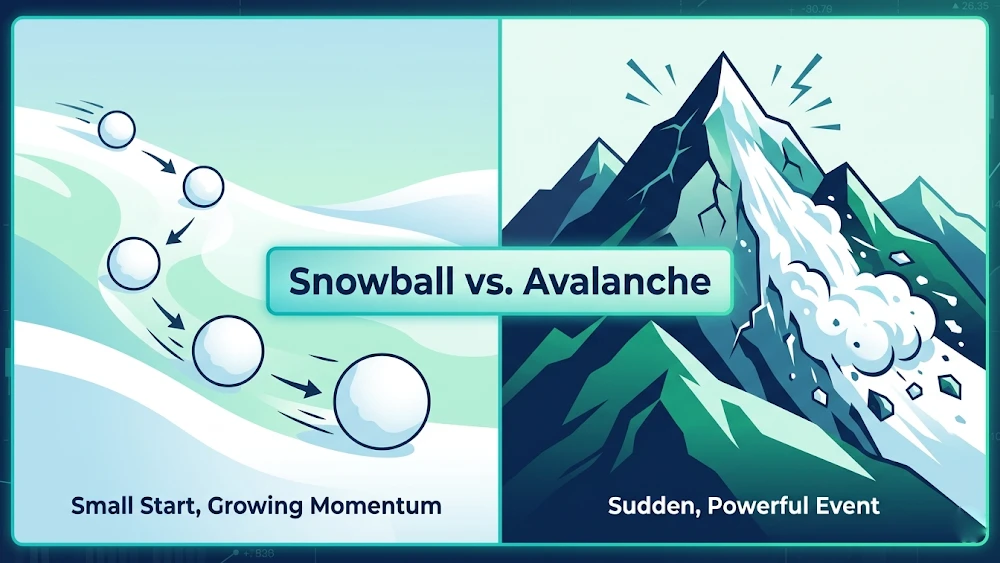
How the Debt Avalanche Method Works
The debt avalanche method ranks your debts by interest rate, prioritizing the highest interest rate first. You direct all extra cash to the costliest debt while paying the bare minimum on the others. Once the highest-interest loan is gone, you shift that full payment to the next highest rate, saving you the most money on interest fees overall.
Most times, tackling big interest debts first means spending less money overall. This way usually clears what you owe quicker compared to focusing on small balances. Sticking with it works best when numbers drive your decisions. If waiting for quick emotional rewards doesn’t matter much, then this route makes more sense math-wise.
Debt Avalanche Example (Same Canadian Scenario)
Start here: an $800 bill from a store, tagged at nearly 30%. That one jumps ahead - no debate. Next up, a $3,200 plastic swipe at just under 20%. Rolling on, a vehicle note for $8,500 set around 7.9%. Then the big number - $22,000 borrowed for school, ticking along at 5.5%.
Funny thing? In this specific example, both strategies line them up the same way right now. Yet switch the rates - if that school debt climbs to 21% while the store slips to 10% - the paths split hard. Now the smarter climb dumps money into the education tab first, even though it's huge.
Debt Snowball Against Debt Avalanche Compared
| Factor | Debt Snowball | Debt Avalanche |
|---|---|---|
| Payoff Order | Smallest balance first | Highest interest rate first |
| Mathematical Result | Interest tends to add up a bit higher overall | Minimizes total interest paid |
| First Win Timing | Fastest - small debts eliminated quickly | Slower if the highest-interest debt has a large balance |
| Psychological Effect | High - frequent wins build motivation | Lower initially; starting out can feel delayed and sluggish |
| Who Benefits Most | People who need motivation and quick momentum | Analytically driven people with high discipline |
| Risk of Quitting | Lower - early wins keep people engaged | Higher initially - often feels like effort without a fast payoff |
| Total Payoff Time | Slightly longer in most scenarios | Shortest possible mathematically |
What Financial Coaches in Canada Suggest
This question comes up more than any other. Truthfully, the reply changes with each individual, shaped far less by numbers than by who they are.
- Consistency Over Perfection: Most people quit before they see progress - so sticking around matters more than perfection. A flawless avalanche strategy tossed aside by month five gets you nowhere, while a simpler snowball approach lived with for thirty-six months shifts everything.
- The Data-Driven Mindset: People driven by clear results, those who enjoy fine-tuning figures, tend to stick with the avalanche method. Seeing debt shrink step-by-step mathematically matches their rhythm.
- The Momentum Mindset: Most folks who’ve tried paying off debt before but quit along the way tend to stick with it more when they see small wins early. When progress is clear right away, staying on track feels less like a chore.
- The Interest Rate Gap: That gap matters most when rates are far apart - like 29.99% on a card compared to 5.5% on a loan. Math leans hard toward avalanche then.
The Hybrid Approach
Starting fast with small wins helps some people gain confidence. After clearing one or two lighter debts, they shift focus toward costlier ones (Avalanche). Momentum builds early, making tougher steps feel easier later. High-interest balances get addressed when energy stays strong. Mixing these approaches works well in practice. The mind responds to progress, while numbers favor smart targeting.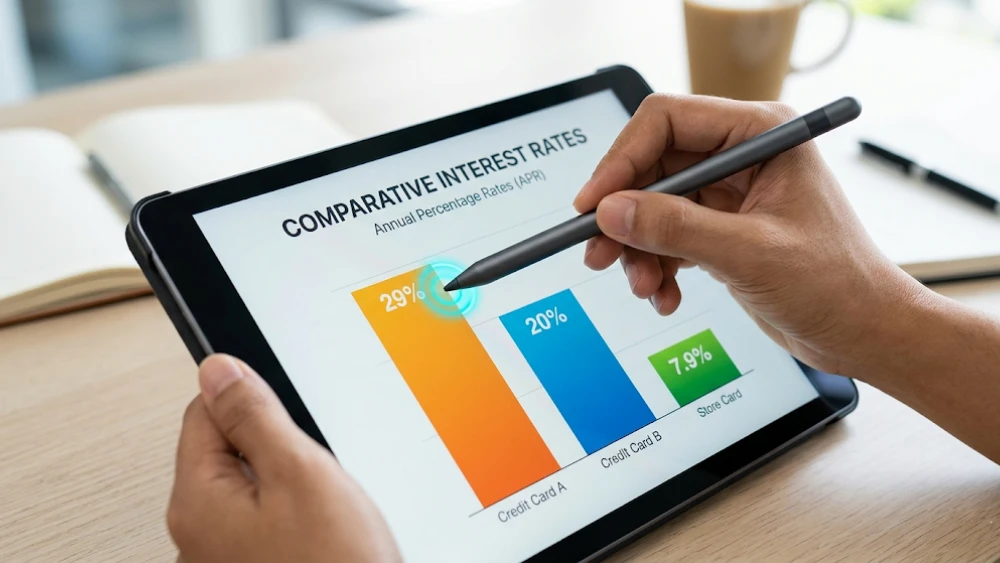
How to Start Either Method in Canada Today
- Inventory Your Debt: Start by writing down each amount you owe. Put together names of lenders alongside how much is due, the interest charged, and what must be paid every month. Don’t skip borrowed cash from relatives or pals either.
- Pick Your Path: Start by picking how you’ll tackle debt. Stick with that choice without changing course for ninety days minimum before checking progress.
- Build a Buffer: Start by saving a thousand dollars for emergencies. That way, if something sudden comes up, you do not need to borrow again.
- Find Extra Cash: Figure out how much more than the bare minimum you can pay on your main target debt every month. Try putting just fifty or maybe even a hundred dollars extra toward it whenever possible.
- Automate Minimums: Set up automatic transfers for each debt's smallest required amount. That way, your credit rating stays safe even if life gets busy.
- Use Windfalls Wisely: When extra money shows up - like a bonus or tax refund - send it straight to the most urgent debt.
- Celebrate Wins: Every time a debt vanishes, mark it somehow - truly acknowledge the moment. That small act strengthens what you’re doing.

Canadian Debt Payoff Errors to Avoid
- Still using the cards: Trying to clear credit card balances while still swiping? That just keeps you stuck. A break on spending lets payments actually make progress.
- No safety net: When life throws a surprise bill, missing an emergency fund means reaching straight for plastic again.
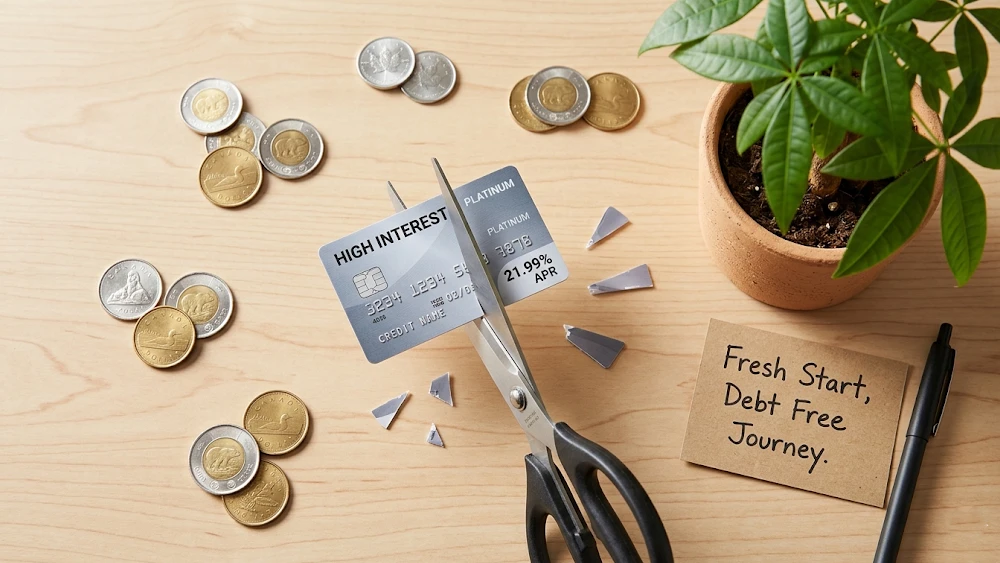
- Consolidation without behavior change: Tackling high-interest balances with a new loan works *only* if you’ve mapped out every payment and shredded the old plastic. Old habits creep back in without a clean break.
- Comparing your journey: Your path unfolds differently because income shapes pace, debt size changes what's possible, and life throws curveballs. Stick close to your own steps forward.
How Financial Coaching Helps You Pay Off Debt Faster
Most people working with a coach clear their debts quicker than when trying alone. That speed comes not from tricks or shortcuts. It grows from having a clear roadmap made with actual income and expenses. A steady check-in rhythm sustains effort even during tight times.
First things first, we map out every debt during early talks - picking a payoff path, working out how long it’ll take, then putting tools in place to make it happen.
Resources from Your Financial Coach in Winnipeg
- Check out how zero-based budgeting helps spot more money for debt payments here: Zero-Based Budgeting Guide.
- Start saving a little each month so you are ready for surprises. Find steps to grow your reserve here: Emergency Fund Canada Guide.
- Explore customized guidance through our Financial Coaching Programs at Adeline Financial.
Decide How, and Follow Through
Most people get stuck on snowball versus avalanche when they shouldn’t. What really matters comes before methods - do you have a clear plan on paper, broken down by month, that you’ll actually stick to until every balance is gone?
One way works just fine. So does the other - real people have won freedom from debt either way. What counts isn’t the system you pick, but saying yes at all, showing up again and again, pushing forward even when nothing seems to move. Should that path feel heavy sometimes, someone who walks beside you might help; we move at your pace.
Begin Moving Toward Living Without Debt
Grab a free financial coaching session to map out your debt payoff strategy.
Book Your Free ConsultationFAQs
Both methods improve your credit score over time - paying off debts reduces your overall credit utilization and increases your on-time payment history. The snowball may produce a slightly faster initial credit score improvement because eliminating small credit card balances reduces utilization quickly. The avalanche may produce slightly slower early improvement but similar long-term results. Neither method damages your credit score when executed correctly (always making at least the minimum payment on every debt every month).
The snowball and avalanche methods are typically applied to consumer debt (credit cards, personal loans, auto loans, student loans) rather than mortgages, because mortgages are significantly larger and longer-term. Your mortgage can certainly be paid off early - making extra principal payments is a highly effective wealth-building strategy - but this typically happens after consumer debt is eliminated. In the 7 Baby Steps framework, paying off the mortgage is step six, well after all consumer debt is gone.
Yes. If you started with the avalanche and are losing motivation, switching to the snowball to get a win is completely legitimate. If you started with the snowball and realize a high-rate debt is costing you significantly, shifting to the avalanche makes mathematical sense. The goal is always debt freedom - the path should serve you, not the other way around.
This is where financial coaching is most valuable. If you genuinely cannot find any extra dollars for debt repayment, the priority is a full budget audit to find hidden spending room - most of our clients discover $100 to $300 per month that can be redirected. If income is the constraint, a career coaching conversation about increasing earning potential may be the right parallel path. If debt is truly unmanageable, a non-profit credit counselling organization in Canada can help explore options including debt management plans.





Ask the Experts