
A figure worth noting: across thirty-five years of work, someone who discusses pay each time might collect an extra million dollars - or more - than another worker just as skilled who stays silent. This gap appears not from doing superior work. It grows only by speaking up when offered a wage.
Still, study after study finds most people in Canada skip salary talks during job offers - especially women, recent arrivals, new immigrants, and those early in their careers. They hesitate because they worry about seeming too pushy. Some dread losing the chance altogether if they ask. Others simply feel unsure how to start the conversation. A lack of clear pay benchmarks adds to the confusion.
Most obstacles here can be overcome. Not just loud voices land better pay - quiet ones do too. This isn’t about who you are. It’s what you know how to do. A toolkit exists. Practice changes outcomes. We teach it often at Adeline Financial & Career Coaching in Winnipeg. Workers walk away clearer each time. One chat might shift your path. You’ll find every piece below.
Most Canadians Avoid Negotiating But Could Benefit From Doing So
Yes. Most employers in Canada plan for salary talks right from the start. They often leave space in their first offer expecting some back and forth. Not asking for more could mean leaving money on the table. It's common here to discuss terms before signing on. Offers usually stay valid if you talk numbers calmly and clearly.
Most people worry more about asking than they need to. From years guiding professionals, we’ve seen rejected job offers after pay talks happen almost never - especially if the discussion stays respectful, makes sense, then suggests fair numbers. A company that pulls back just because someone names a fair price? That kind of place isn’t worth your time anyway.
Skipping talks about pay? That choice sticks. It grows heavier over time. Future bumps, rewards tied to position - they usually build off what you earn now. Begin too low, and the difference drags behind you. Years pass. The gap stays. Maybe it never leaves, not while you stay there.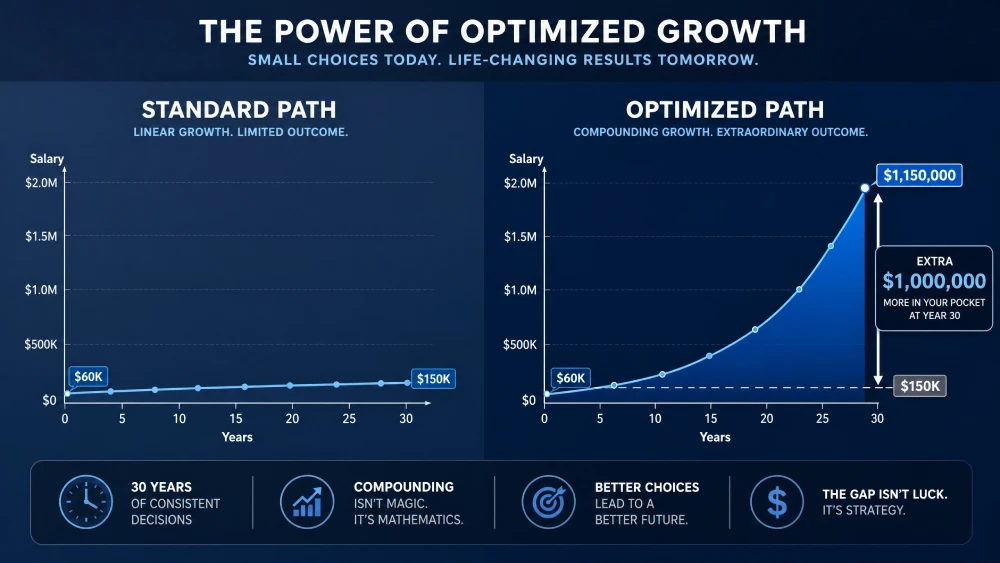
Step 1: Check What Jobs Pay in Canada
Start by gathering numbers, because guessing won’t help when talking about pay. Knowing average wages matters most - check what others earn doing your job nearby. Industry and location change everything, so skip broad assumptions. Without local facts, it's like discussing a used car’s cost while blindfolded.
The best sources for Canadian salary data in 2025:
- Job Bank Canada: Start here if you need real numbers on pay across Canada. It runs through every job type, region, and skill tier using government-collected details. You will find clear averages, not broad ranges. When location matters, it splits results by province. Hard facts sit front and center.
- Glassdoor: On glassdoor.ca, workers in Canada share their pay details openly. Company names appear alongside typical earnings for different positions. Sorting by workplace gives a clearer picture of what roles pay. Location matters - salaries shift across provinces and towns.
- LinkedIn Salary Insights: For those with a paid membership on LinkedIn, salary details adjust results based on where someone lives, how much work history they have, or what degrees they hold.
- Robert Half Salary Guide: Every year brings out the Robert Half Canada Salary Guide. Widely used across the country, it shapes how people view pay for professional jobs.
- Indeed Canada: Job pay details come from posted listings and worker submissions. These figures help check consistency across sources.
- Direct Networking: Chatting directly one-on-one with folks doing similar work elsewhere. Sharing pay details now happens more openly across Canadian workplaces.
Start by thinking beyond just one figure when stepping into talks. Instead, carry a span of values along. Place your real goal near the center of that spread. Begin higher than that point - set your first request close to the top edge. That way, moving down feels like giving ground, even if landing where you planned all along. Picture this: worth between $75,000 and $95,000, aim for $85,000, propose $92,000 at the start.
Step 2: Know When to Talk About Salary
When you speak can change everything during pay talks. Follow these moments carefully:
Delay During Job Search
Talking pay too soon can leave you weaker. Right at the start, if they ask what you want to earn, it helps to pause. Instead of answering, shift gently: "I really want to understand everything this job involves before we talk numbers - maybe we come back to that once we know more?" Often, they do not mind waiting. The moment changes when you’ve shown what you bring.
After Getting the Offer: Your Power Is at Its Peak
Right when a company gives you an offer, that power shifts toward you. Because now they’ve picked you - yes, you - above everyone else. That choice changes everything. At this point, talking about terms makes sense. After seeing their proposal, your role transforms.
Performance Reviews: Often Overlooked Chances
Most workers miss a key chance to boost their pay each year when reviews come around. Waiting on your boss to suggest more money usually ends with smaller gains. Build your argument ahead of time instead. Speak up well before the meeting hits the calendar. A talk weeks early sets the stage better than waiting till the last minute.
Step 3: Build Your Negotiation Case
Money doesn’t increase just because you wish for it. What works better? Showing clear proof - what you can do, what others earn, how you help the team succeed. Start there.
- Show Excitement First: Start by showing real interest in the job and company. Hold off until after sharing your true motivation. Speaking passionately first makes it clear you care about fit, not just money.
- Use Your Research: "From checking Job Bank Canada along with Robert Half’s 2025 salary data, pay for this job in Winnipeg runs between $X and $Y." Numbers like these show where things stand right now. That is how you back up your number.
- Highlight Your Value: "Because I’ve handled projects like yours before, asking X dollars feels right. My certification in the field backs up what I can deliver." Numbers go up when results speak clearly. What I’ve done lines up with top-tier expectations.
- Be Specific: Start by saying exactly what you want - pick a clear figure. Requests like "a little more" can be ignored. Naming an exact amount shows you’ve thought it through: "Given everything, my expected salary is X dollars."
- The Power of Silence: Wait. That moment right after you say what you want? Stay silent. Let the air sit heavy. It feels odd, sure. Yet that stillness pushes things your way. Whoever breaks it first loses ground.
Salary Talk Examples for Workers in Canada
Job Offer Negotiation Script
"Thank you so much for the offer - I'm really excited about this opportunity and I can see myself making a strong contribution to the team. I've done some research on the market rate for this role in Winnipeg using Job Bank Canada and a few other sources, and I'm seeing a range of $X to $Y. Given my [X years of experience / specific skills / relevant achievement], I'd like to request a starting salary of $[high end of your range]. Is there flexibility to get there?"
Handling When They Say This Is Their Highest Offer
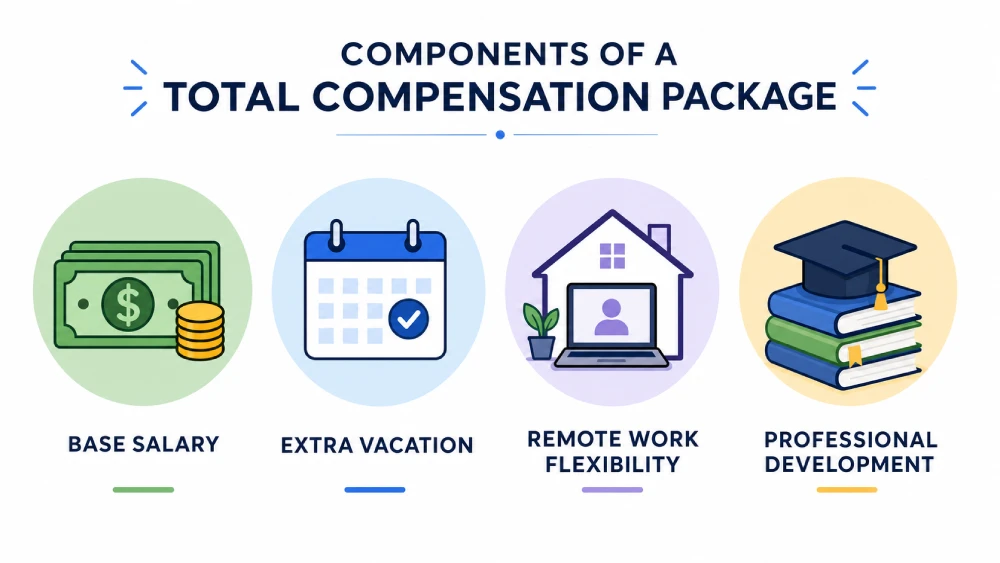
"I completely understand, and I appreciate you being transparent about the budget. Given that there may be some constraint on base salary, I'd love to explore whether there's flexibility in other areas - signing bonus, additional vacation days, remote work flexibility, or professional development budget. Would any of those be possible to discuss?"
Asking for More Pay Where You Work Now (Internal Raise Request)
"Maybe we could find a moment to talk pay soon. Lately, around [time period], I handled [specific achievement 1], moved forward on [specific achievement 2], then followed through with [specific achievement 3]. At the same time, checking what others make in [city/industry] shows numbers between $X and $Y. Matching that level feels like a fair next step. Here’s what matters most to me: staying with this team feels right, yet the pay needs to match the work I deliver. Maybe we could find a moment soon to talk it through."
When They Say No
A refusal during pay talks might just be a pause - yet each time it happens, talk often shifts in quiet but useful ways.
- Set a Future Date: "I get it - can we set a check-in point down the line, maybe around the three-month mark? What kind of results would show enough progress to justify adjusting the number later?" Turns silence into promise.
- Pivot to Total Compensation: Start by wondering what else might balance a lower paycheck. Maybe they offer working from anywhere, more days off each year. Think beyond cash: dental or medical perks, retirement contributions, or flex hours. Value shows up in many forms, not only in monthly deposits.
- Know When to Walk Away: Should the difference feel too wide, speak plainly but kindly. When a position pays less than your worth right away - while dodging pay talks - red flags appear. Walking away calmly beats staying and growing bitter later.
Salary Negotiation Across Different Groups in Canada
Women Talking Pay in Canada: Women often skip salary talks, studies across Canada confirm. Yet those who ask anyway - calmly, clearly - tend to land higher pay. Coaching here works directly on that hesitation, using practice scenes and word-for-word examples built around what women actually encounter.
Newcomers in Canada Figuring Out Pay: Starting fresh in Canada can leave people unsure if their overseas background matters. Your work history abroad? It counts. Speaking more than one language helps too. Look up what roles like yours typically earn across local companies instead of guessing. Walk into talks about money without apology.
Recent Graduates Navigating First Salary Talks: Thinking you’re too green to negotiate trips up many fresh grads across Canada. Skills matter. So does that degree. Check starting pay for jobs like yours. State your number clearly. A bump of just three thousand bucks early on adds up big later. Small start. Big ripple.
How Career Coaching Helps You Feel More Confident When Negotiating
Most people know what they should do, yet doing it when stress hits is another story entirely. Inside coaching talks, we act out pay discussions on purpose - one of us takes your part, the other steps into the employer's shoes, going over lines again and again until speaking up stops feeling like walking onstage barefoot.
Start by exploring what your skills are worth right now. Your unique position takes shape through tailored arguments that reflect your actual contributions. Other rewards beyond salary come into view once you know where to look. Staying steady during quiet moments becomes easier with practice and clarity.
Most people we coach say just one talk at work covers the cost of their training. A single chat about pay puts money back fast when they try what they practiced.
Explore Adeline Financial's Programs:
- Career Coaching Services in Winnipeg
- Career Change Coaching in Canada
- LinkedIn Optimization Tips for Job Seekers in Canada
- Career Coaching For Graduates

Ask For What You Are Worth
Most bosses won’t hand out extra money just because they feel like it. Talking about pay isn’t rude or pushy - people actually expect it at work. If you skip that talk, the one missing out is yourself. Instead of waiting, speaking up shapes what happens next.
Hard work built your skills, your background, your learning. Each place you join gains something solid because of you. Wanting fair pay for what you offer isn’t about greed. It’s sensible. This kind of clarity becomes easier with support like Adeline Financial’s career coaching.
Ready to Practice Your Negotiation?
Read our Client Success Stories or grab a spot for your free career coaching chat.
FAQs
No - when done professionally and with research to support your ask, salary negotiation is standard practice that most Canadian employers expect and respect. What signals unprofessionalism is making unreasonable demands without justification, negotiating aggressively after already accepting an offer, or making ultimatums. A calm, researched, specific negotiation request signals confidence and preparation - qualities every employer values.
Yes, and you should. Total compensation includes base salary, performance bonuses, signing bonuses, vacation time (the Canadian employment standard minimum is two weeks, but many professional roles offer three to four weeks), extended health and dental benefits, RRSP or DPSP matching contributions, remote work flexibility, professional development budget, and equity or stock options at some companies. If the base salary truly cannot move, negotiating stronger benefits can significantly increase the total value of your package.
When a job application requires you to input a salary expectation, enter a specific number at the high end of your researched market range. A specific number signals research and confidence. Entering 'negotiable' is a missed opportunity - it gives you no anchoring advantage. You can always negotiate down from a high anchor; you cannot negotiate up from a low one. If asked to provide a range, make your floor the number you would genuinely accept and your ceiling at least 15 to 20 percent above that.
Mentioning a competing offer is acceptable and often effective - but only if you actually have one. Manufacturing or exaggerating a competing offer is dishonest and can permanently damage a professional relationship if discovered. A real competing offer creates genuine leverage: 'I want to be transparent - I do have another offer at $X. This role is my first preference, and I would love to find a way to make it work. Is there any way to get closer to that number?' This is honest, professional, and often effective.





Ask the Experts